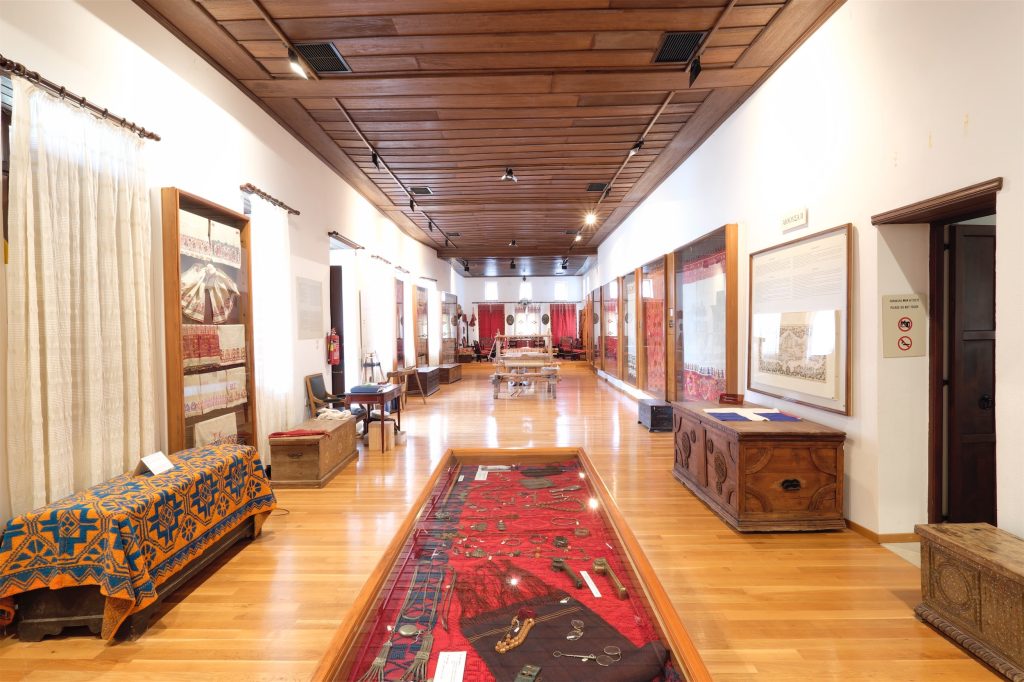
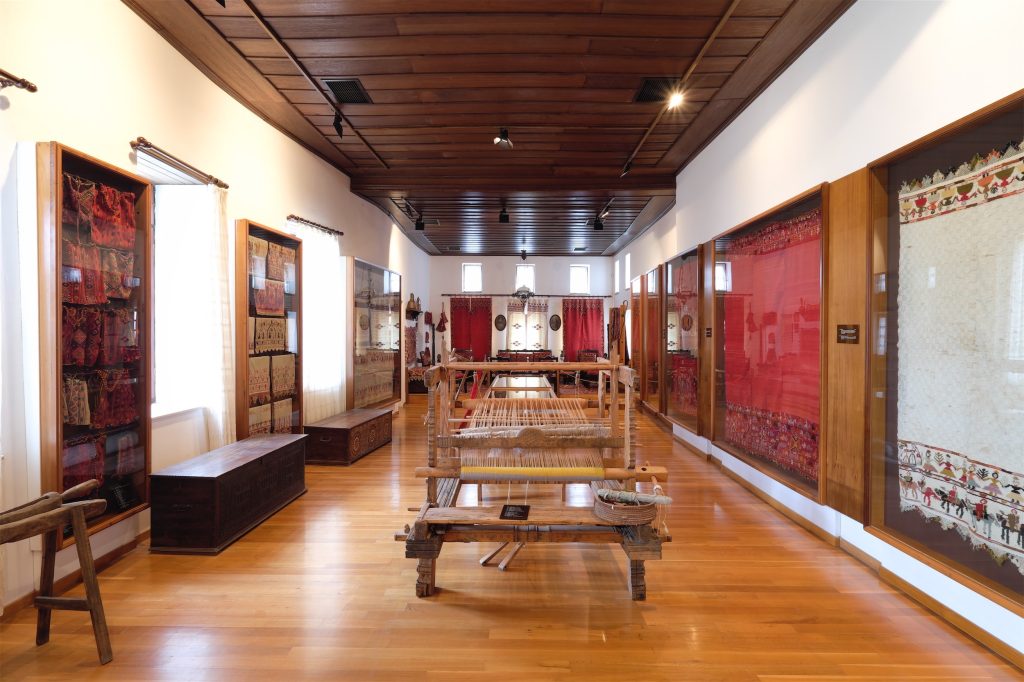
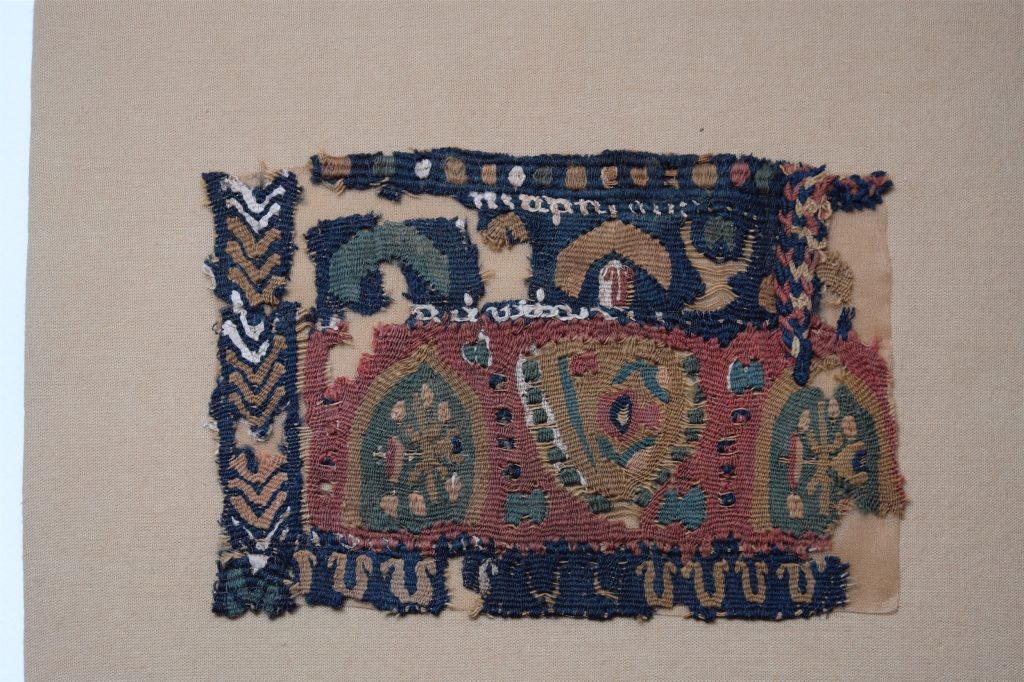
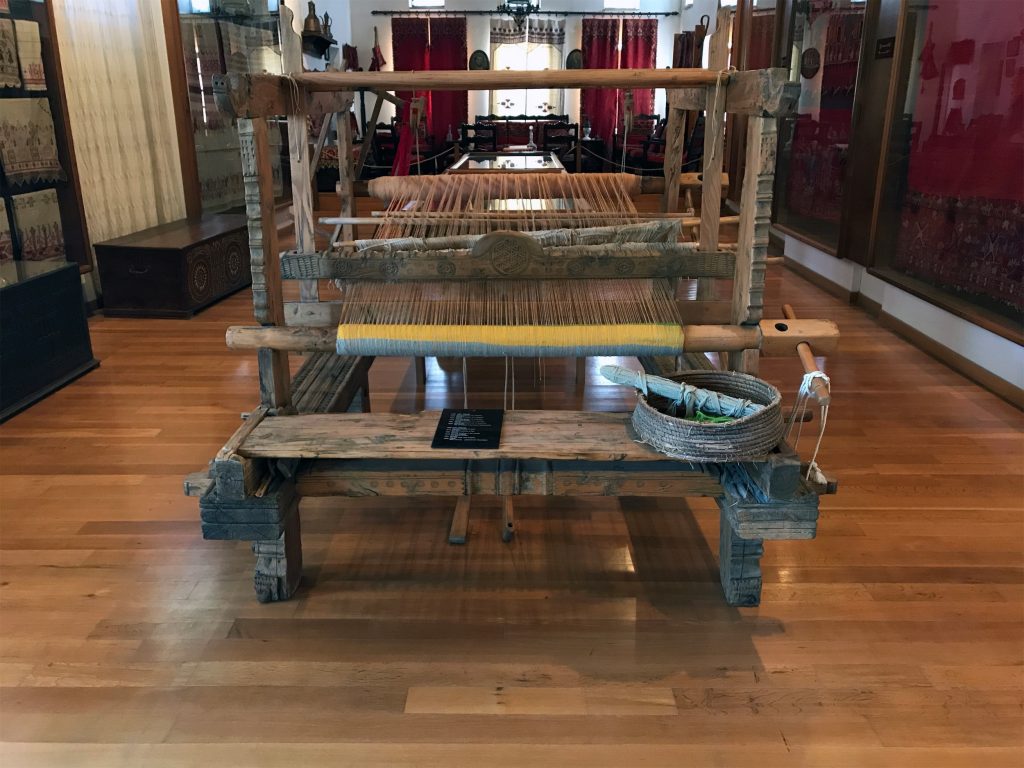
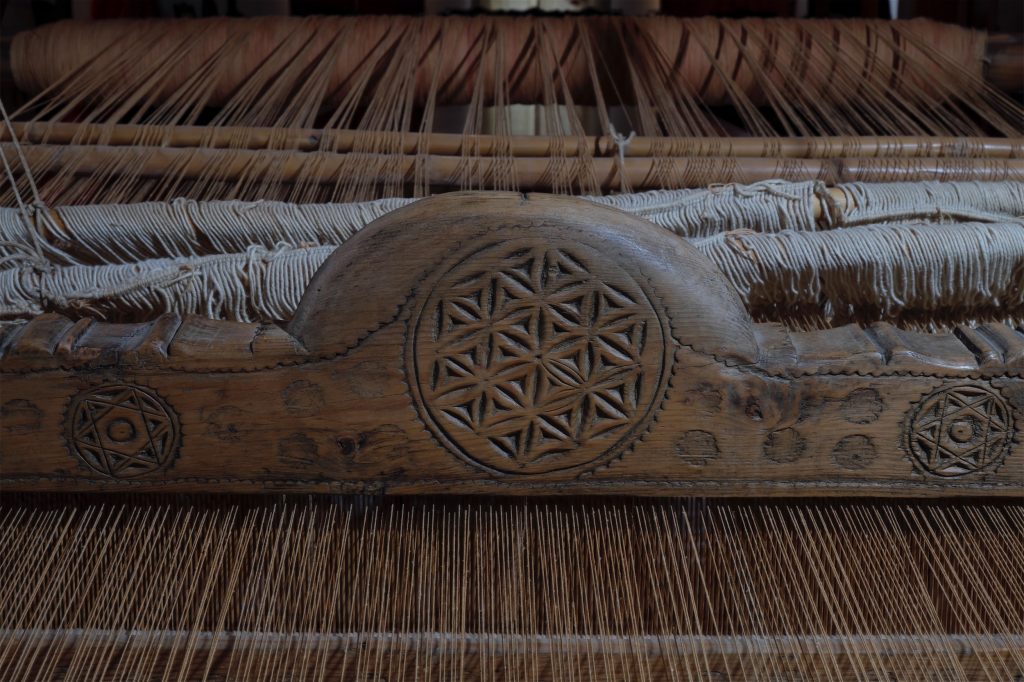
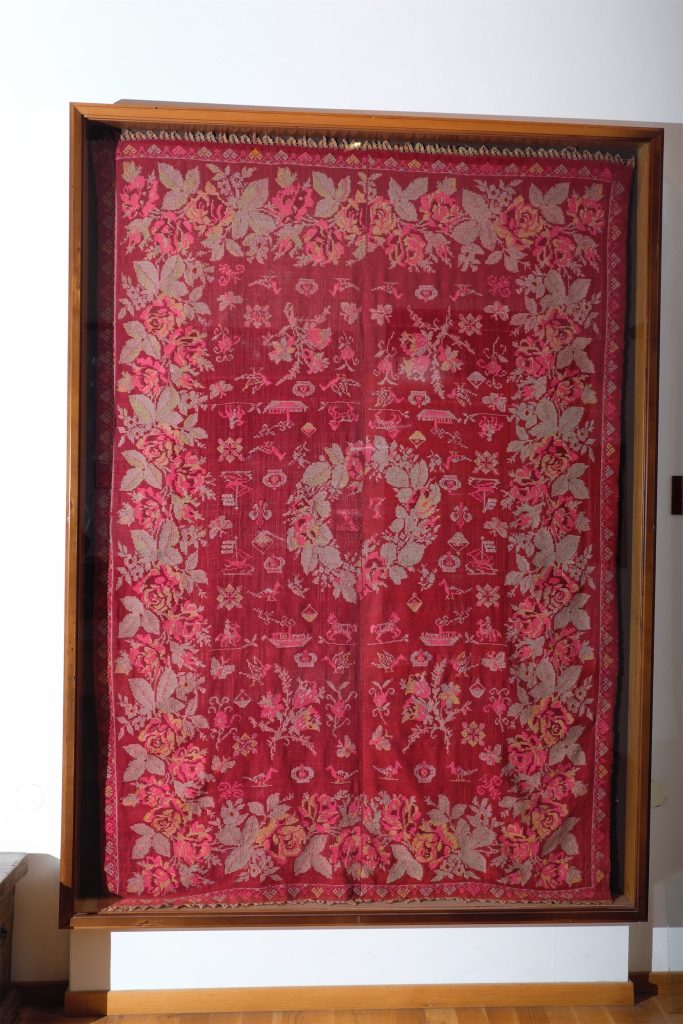
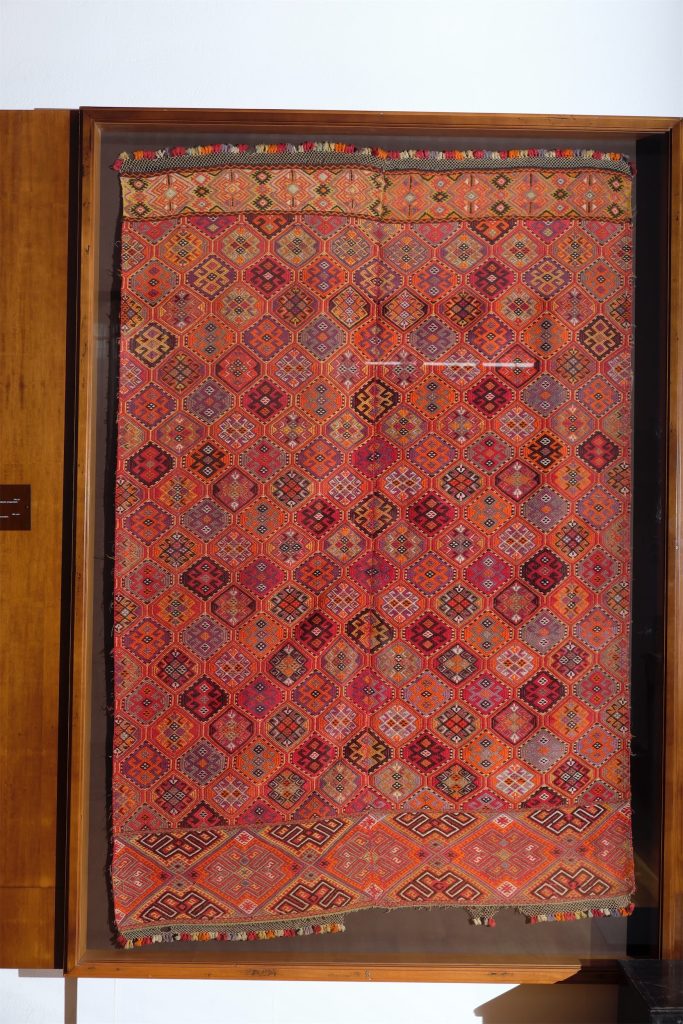
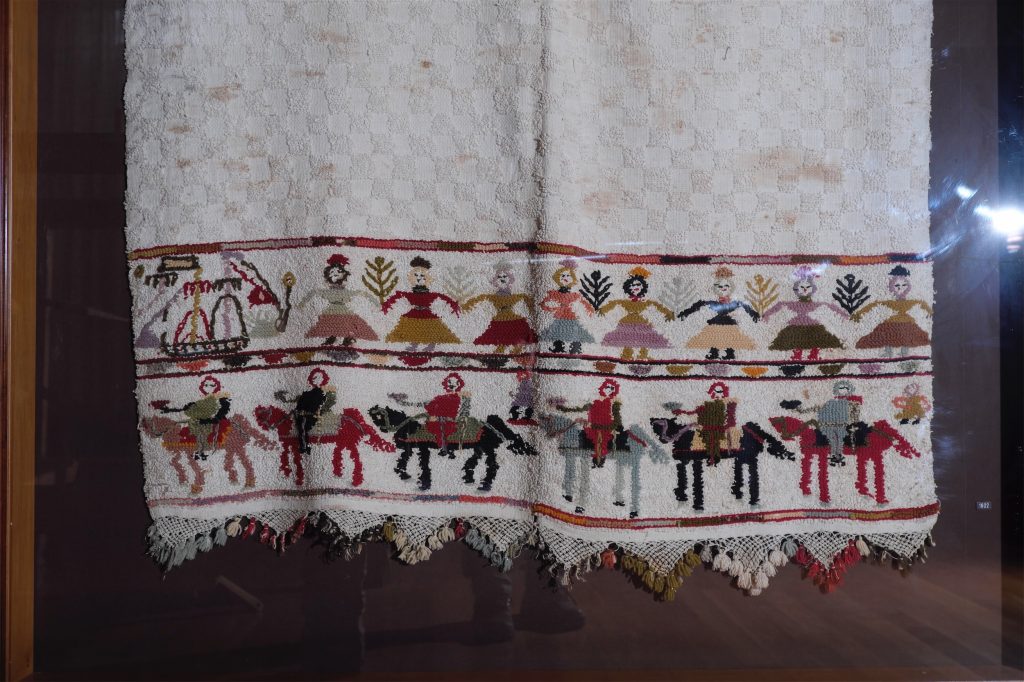
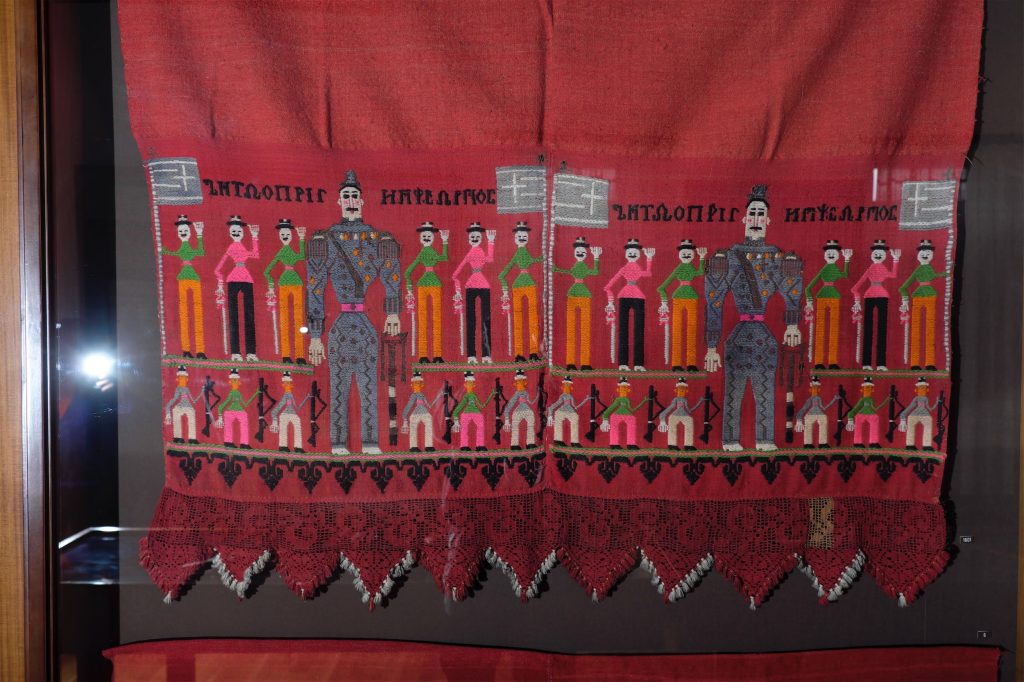
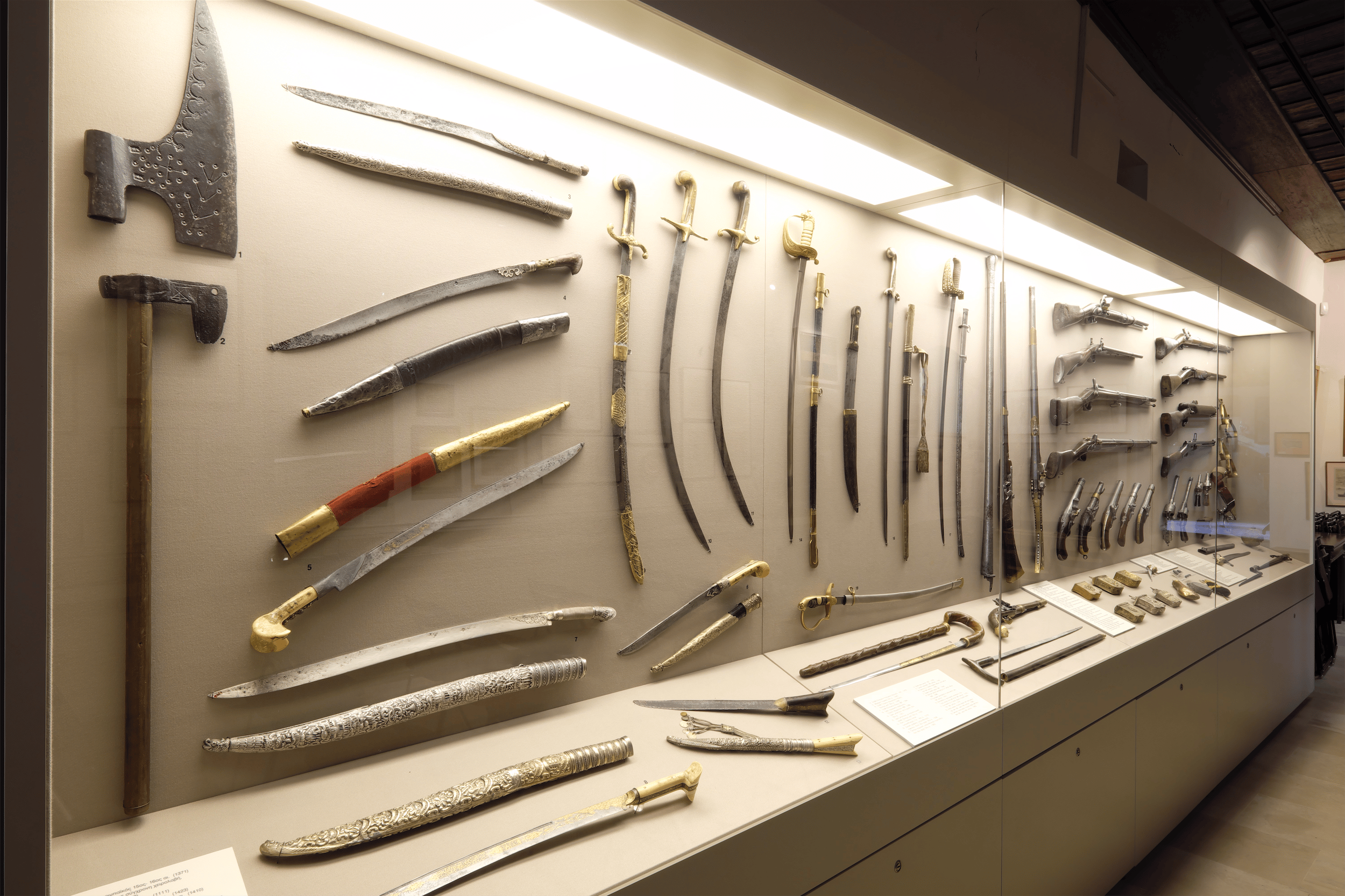
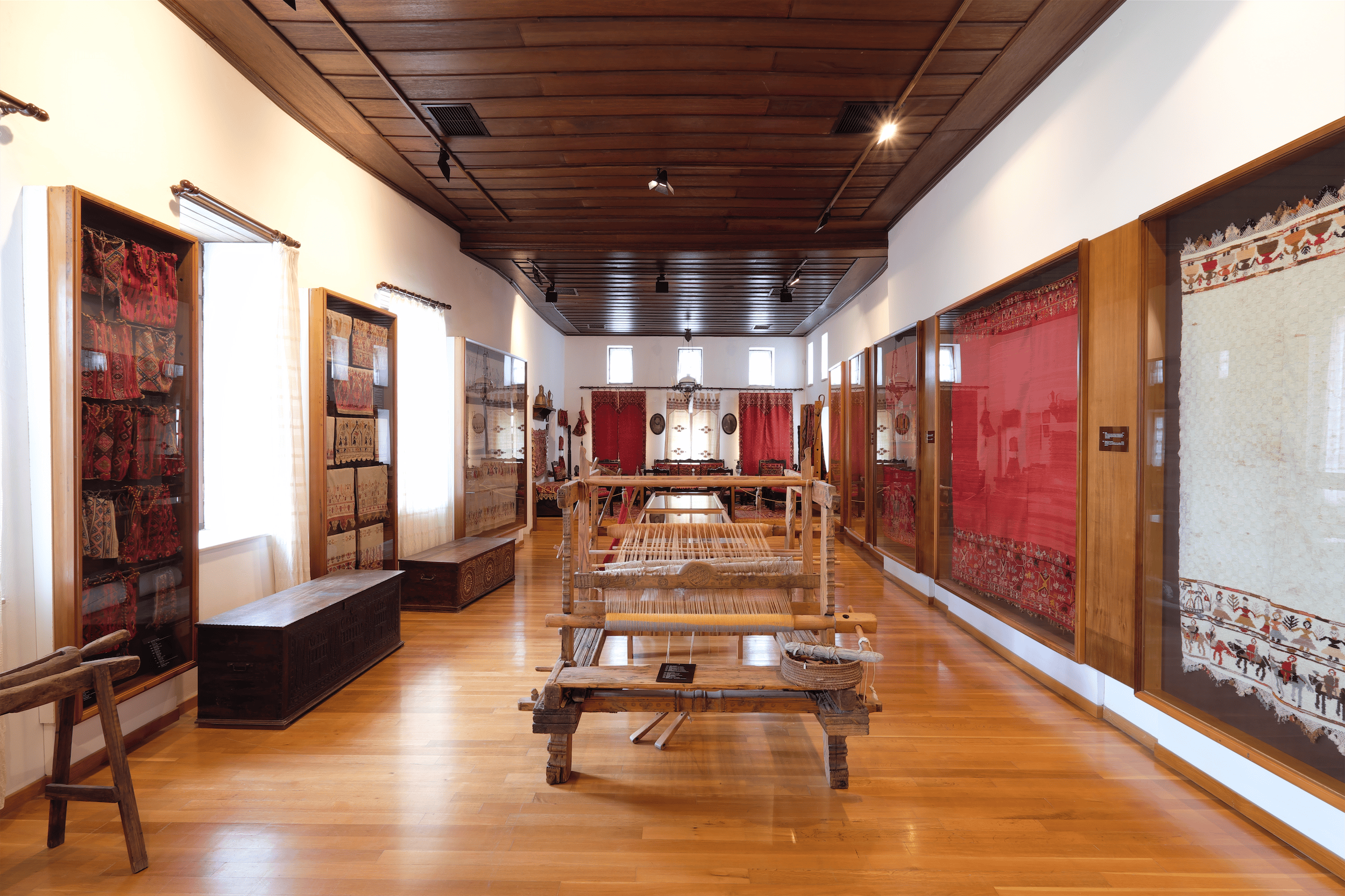
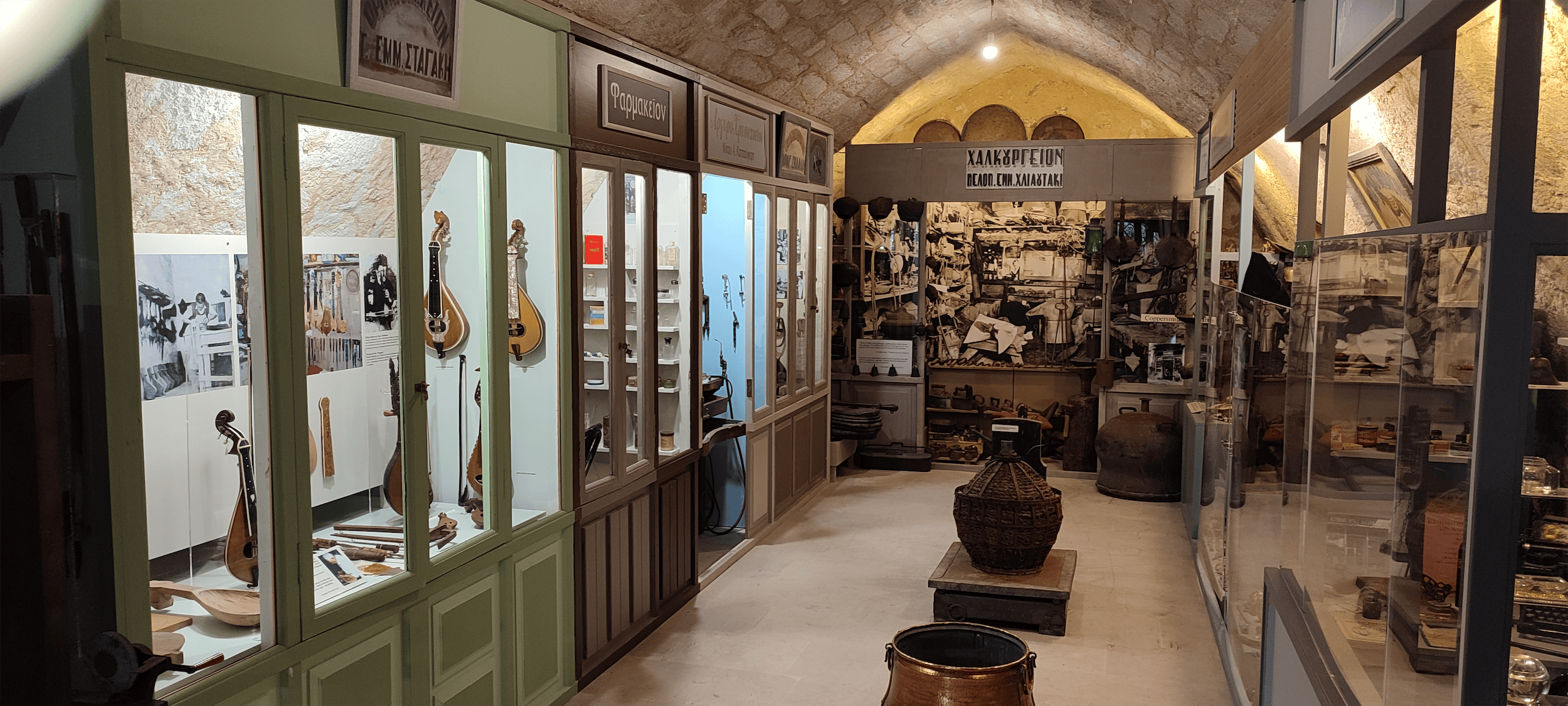
In the folk art collection we present objects of traditional handicrafts, weaving, tools of weaving, embroidery, laces, pottery, baskets, agricultural tools. Also the production of silk, bee-keeping and the traditional breads of Rethymnon.
Weaving
The long tradition of Cretan women in weaving is borne out by the elaborate and luxurious Minoan garments, known mainly from the wall-paintings and surmised from the abundant loom-weights brought to light in the Minoan palaces and houses.
For centuries, textiles were dyed with colours obtained from plants, and porphyra (purple), which was extracted from the murex mollusc. The tradition was passed on from Minoan to Archaic to Classical times, and later from the Byzantine Age to the periods of Venetian and of Ottoman rule, to reach the present. Weaving, mainly a domestic craft, remains one of the most conservative and hands down from generation to generation the secrets of the complicated technique, as well as many motifs, symbols, patterns and representations.
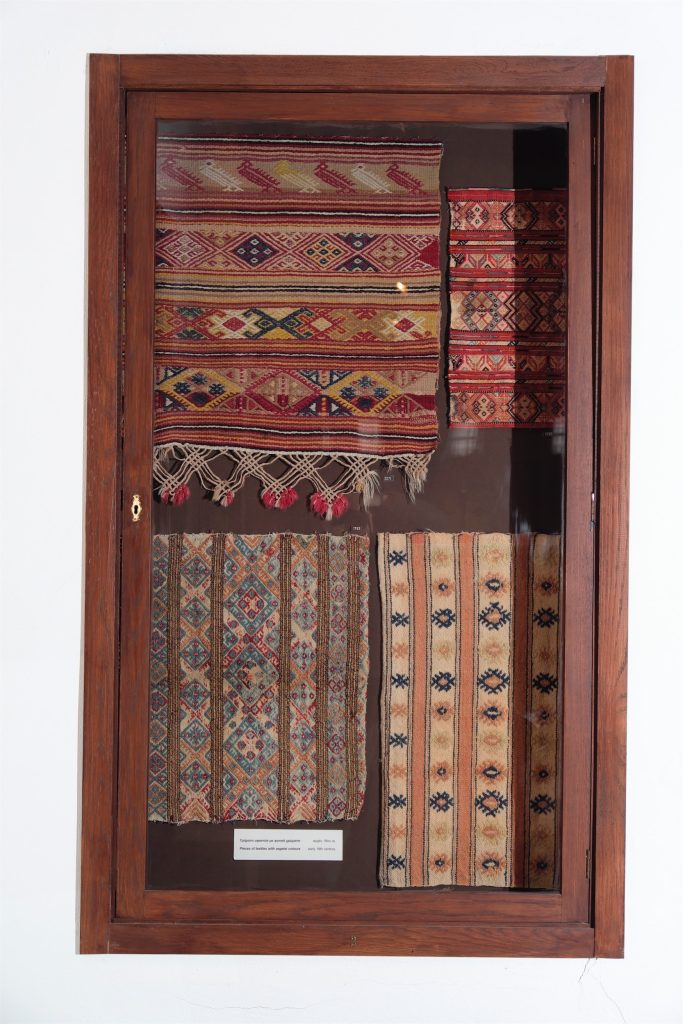
Until the early decades of the twentieth century, Cretan women spun the yarns –from flax, cotton, wool and silk–, dyed them with vegetal colorants and wove her dowry from them. Dowry textiles fall into two categories: items of clothing, which were parts of the folk costume, male, female and child, and items used for the needs and adornment of the house.
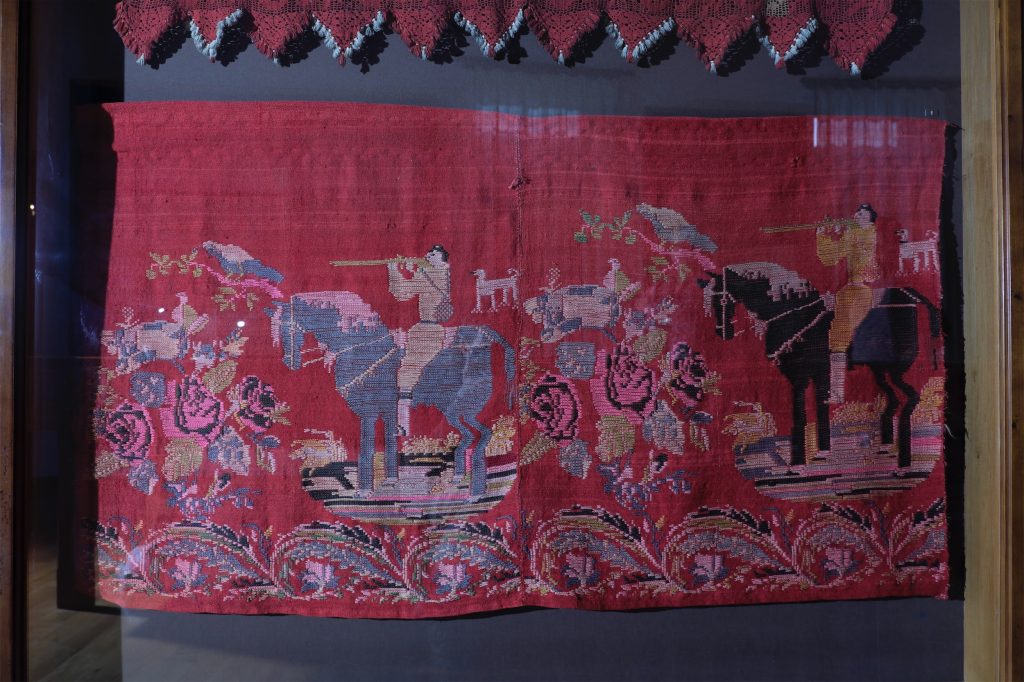
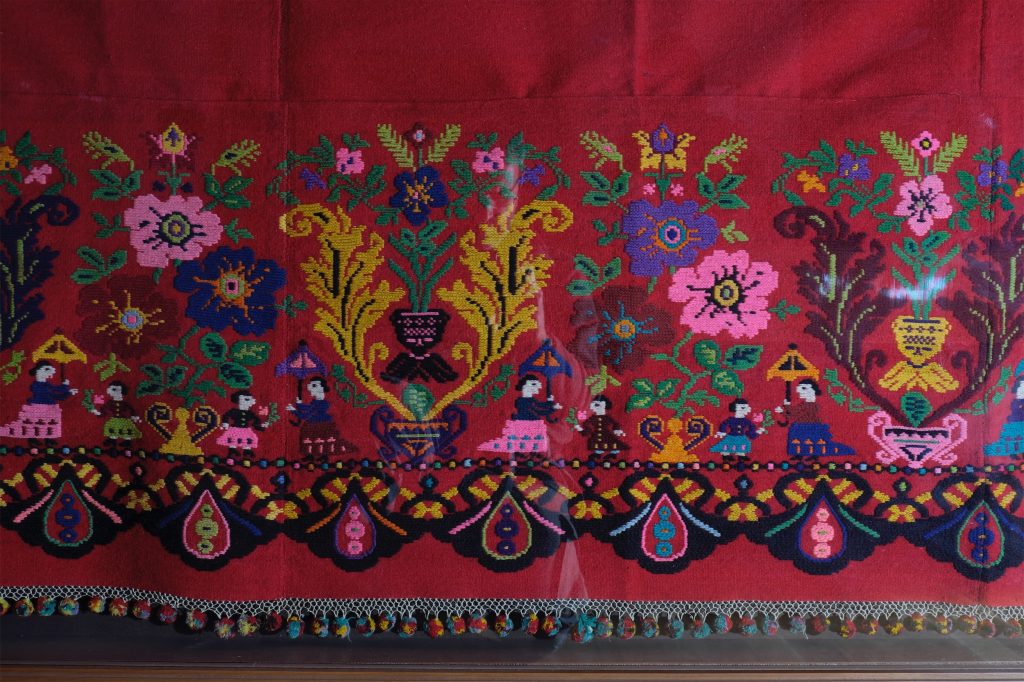
The decoration of Cretan textiles is particularly interesting for the study of decorative designs and symbols of Greek folk art. The weavers enlivened the large surfaces with subjects arranged in zones. Five categories of subjects can be distinguished: geometric, floral and faunal, religious, secular and historical.