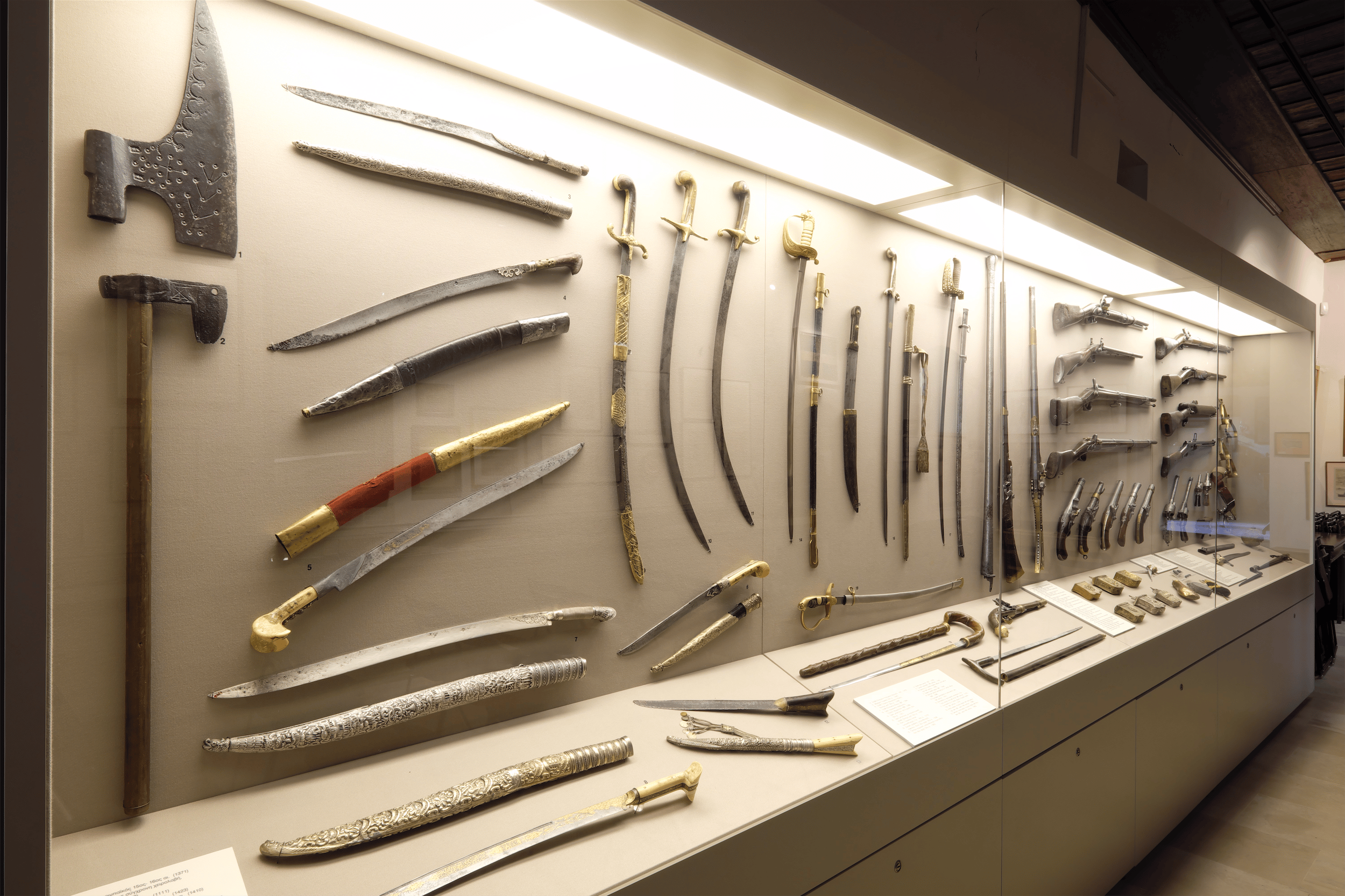
The historical collection includes coins, weapons- guns, Cretan knives, pistols. Also revolutionary flags, maps of Crete, objects from the Ottomans presence on the island, from the era of Autonomy, the Russian presence in Rethymno until the union with the rest of Greece in 1913. It also includes objects from the 1st World War, the Macedonian Strugle and the Battle of Crete and the German occupation.
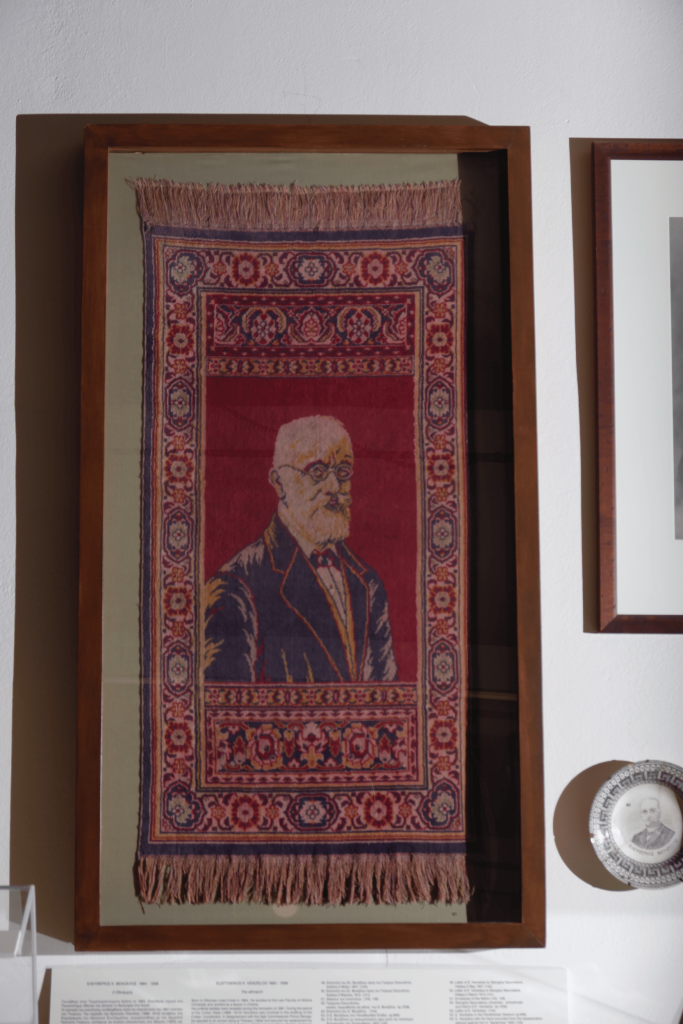
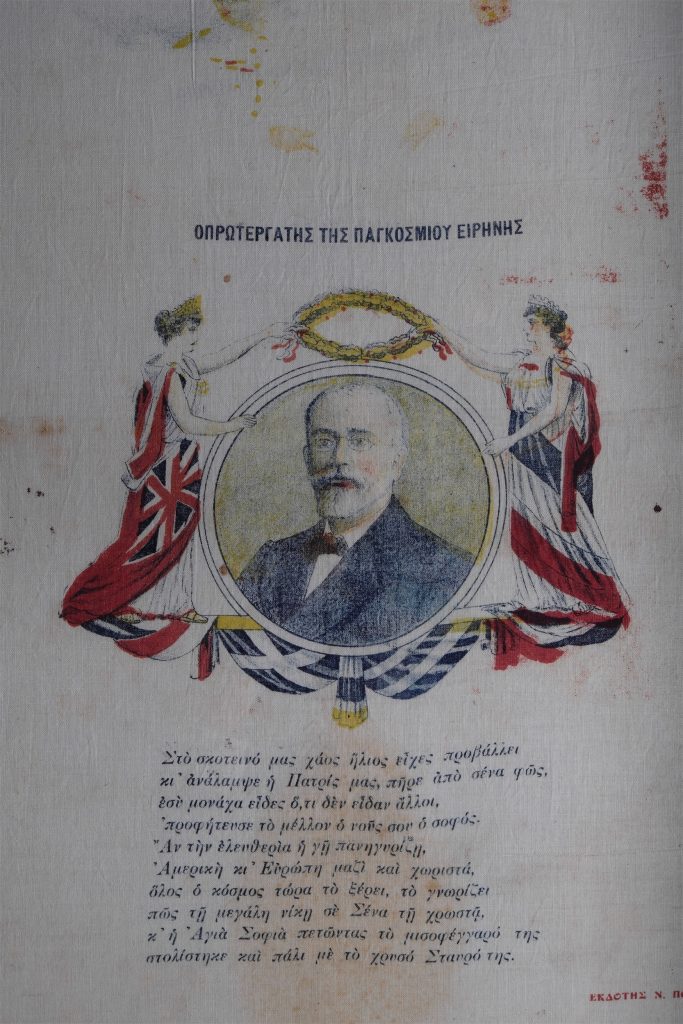
Eleftherios Venizelos – The Ethnarch
Venizelos was born in Ottoman-held Crete in 1864. He studied Law at the University of Athens and practised as a lawyer in Chania.
His leadership abilities became apparent during the 1897 revolt against the Turks. In the period of the Cretan State (1898-1913) he was instrumental in drafting the Cretan Constitution. He clashed with the High Commissioner Prince George, resort- ed to an armed rebellion at Therissos (1905), and succeeded in having the prince replaced by the Greek politician Alexandros Zaimis. In 1910 Venizelos assumed the premiership of Greece and formed the ‘Liberal Party’. Protagonist in the political and economic restoration of the country, and the victorious outcome of the Balkan Wars (1912-1913), in the First World War, he came into conflict with the crown and imposed Greece’s entry into the hostilities on the side of the Allies. With the Treaty of Serves, Venizelos succeeded the creating of a Greece of two continents and five seas. Followed the attempt against his life, at Lyon station in Paris.
Venizelos lost the general election in 1920 and temporarily withdrew from poli- tics. He returned to parliament after the Greek defeat in Asia Minor, in 1922. With the compulsory exchange of populations – Greeks and Turks – and the Treaty of Lausanne (1923), Venizelos changed the direction of Greek politics and laid the foundations for peaceful development.
The last four years of his governance (1928-1932) were a period of stability and achievement. Paramount success was the treaty of friendship signed between Greece and Turkey (1930). The end of Venizelos’ career was marred by a new attempt on his life in June 1933 and the failed coup in March 1935. The statesman went into self-imposed exile in Paris, where he died on 18 March 1936.