In a place that is rightly dubbed the City of Arts and Letters, the Historical and Folk Art Museum of Rethymnon, now firmly established in historical fabric, is an important space. Within its walls the beacon of the historical and folklore tradition of Rethymnon is passed on to future generations.
History of the Building
The Historical and Folk Art Museum of Rethymnon is housed in the Venetian townhouse of the Clodio family. This was a Veneto-Cretan family which settled in Rethymnon in the 13th century and acquired the title of Cretan nobility (Νobili Cretensi). The other residence of this family, their summer villa, stands in the village of Chromonasteri and nowadays houses the Military Museum of Rethymnon.
On the north façade of the mansion, in its west part, which today houses a traditional workshop making phyllo pastry, is the original central doorway of the complex. Carved on the lintel in capital letters is the Latin motto VIRTUTE FULCIDA DOMUS MDCIX KAL. (With virtue shines the house, early June 1609), while on the crowning pediment is the family coat of arms, framed by leaves and flowers to the left and right of it. This is a unique case of a pedimented lintel on a house in Rethymnon, although this was a common feature in ecclesiastical architecture, an influence of the Italian Renaissance.
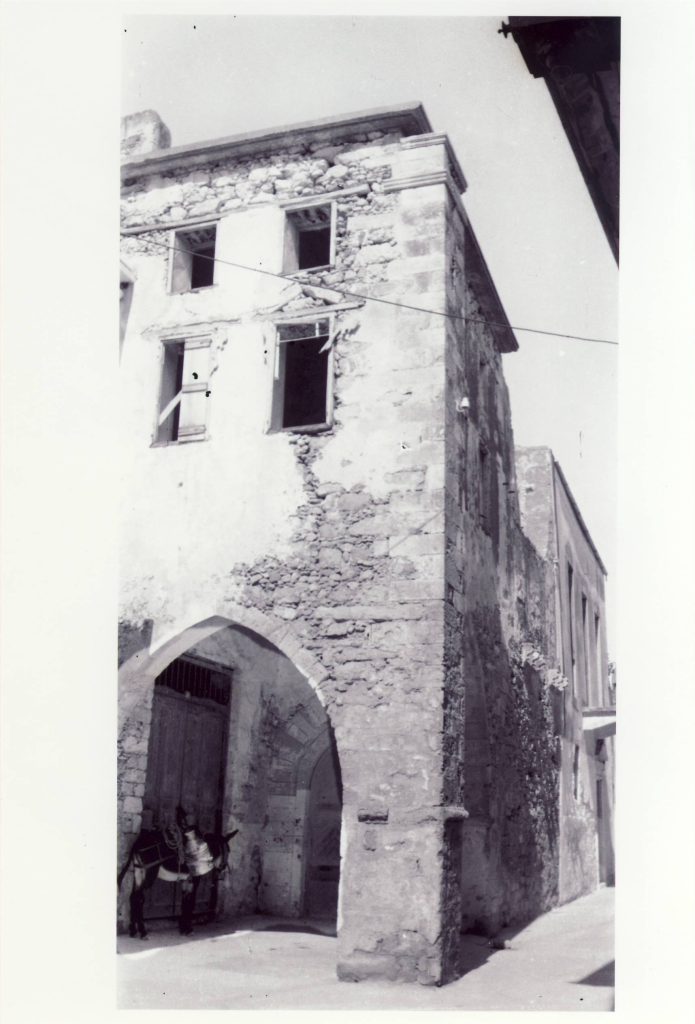
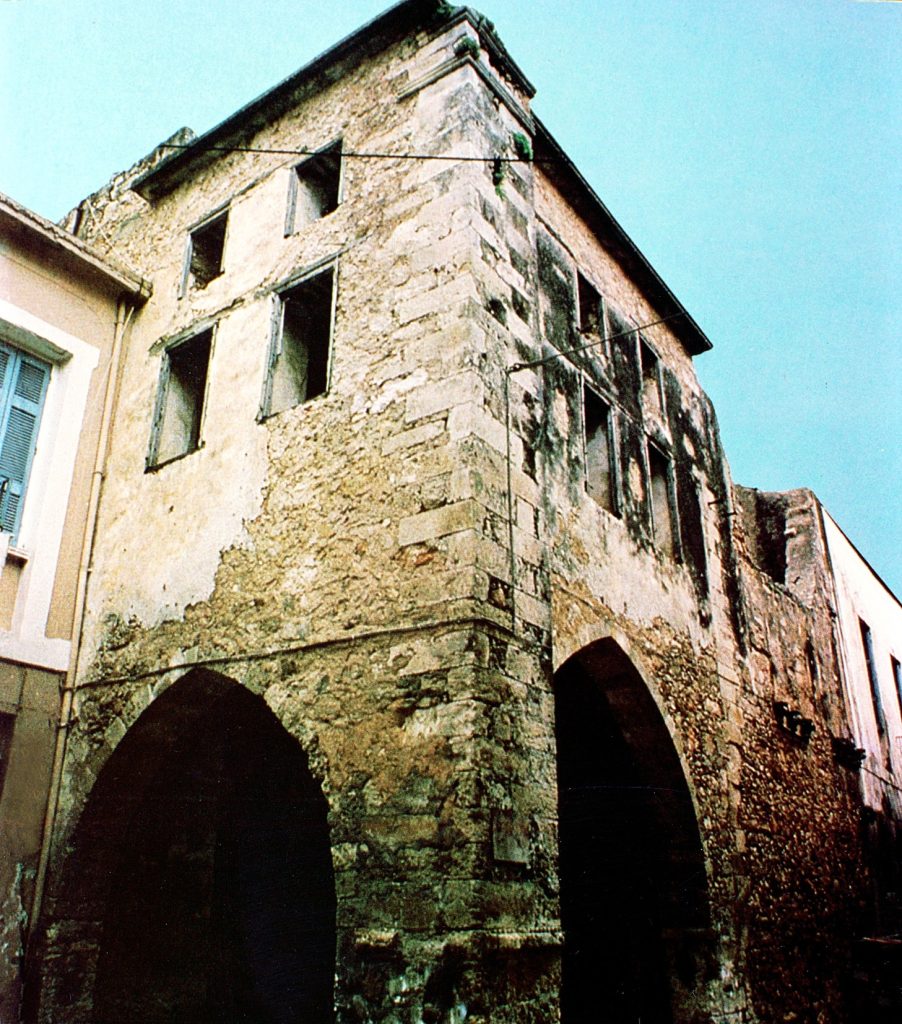
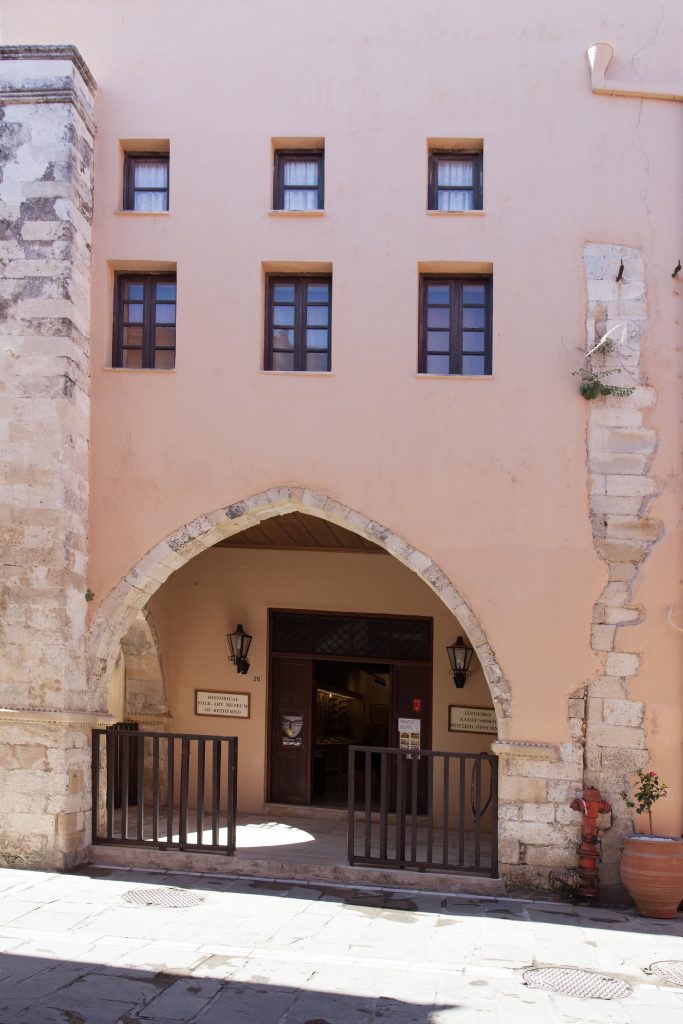
The east part of the building creates one of the most characteristic venues in the old town of Rethymnon. A vaulted-roofed passage served not only the toing and froing of pedestrians but also the entrance to the shop there and to the ground floor of the house. The passage is formed from two pointed arches which unite into a common pier. This part of the building that is now the premises of the Museum was built later than the west one.
In the large hall above the passage are two rows of three windows, on each of its two fronts.
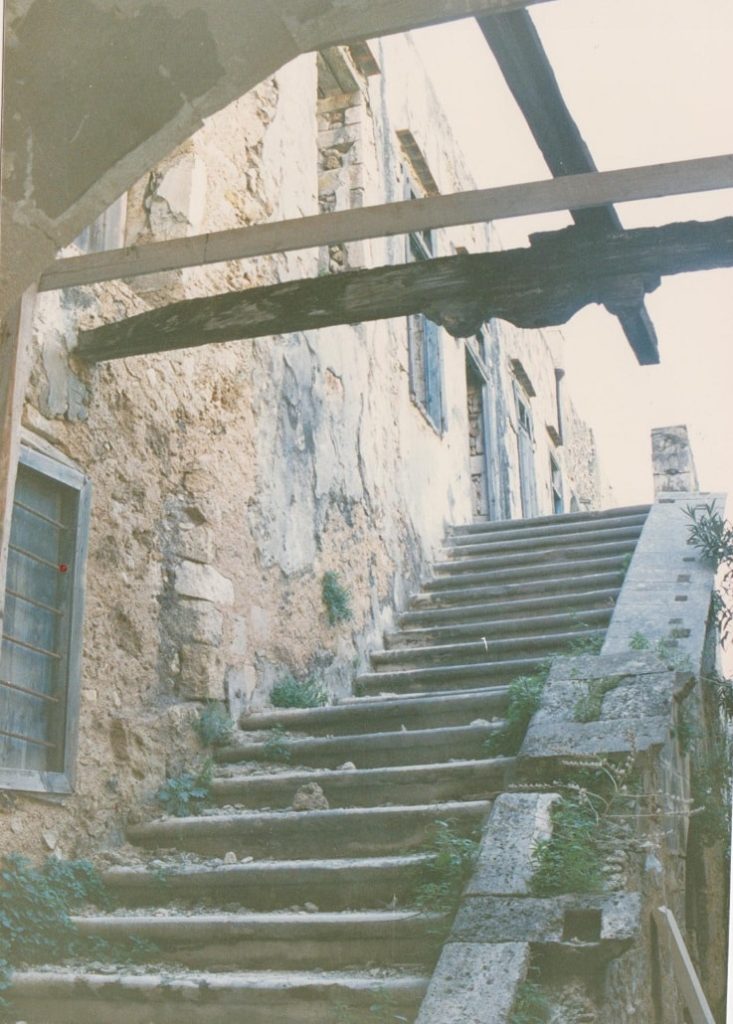
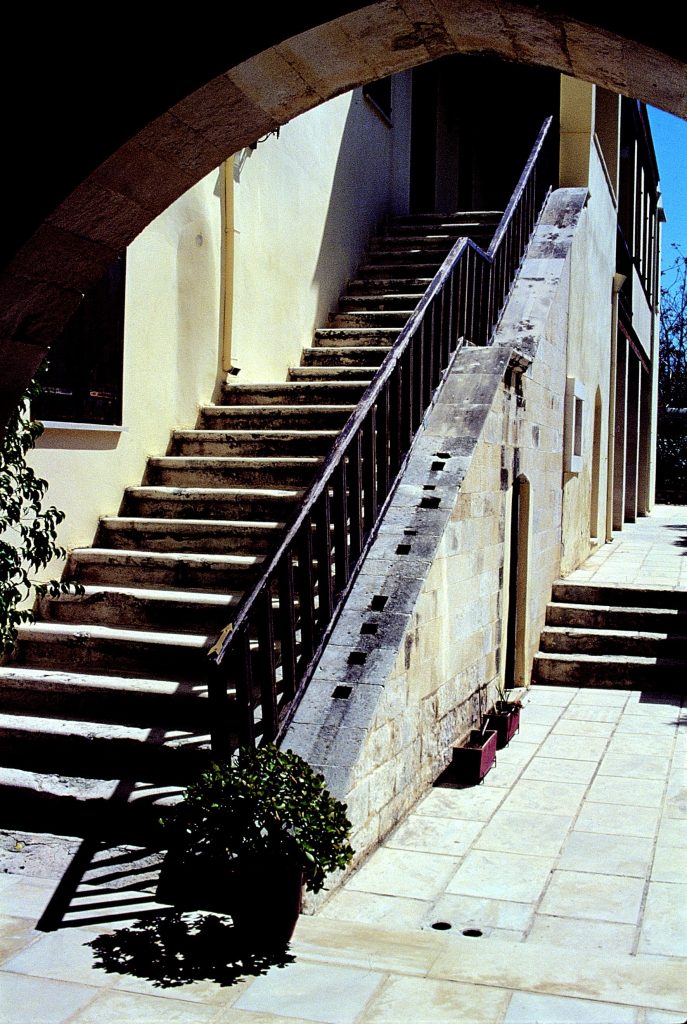
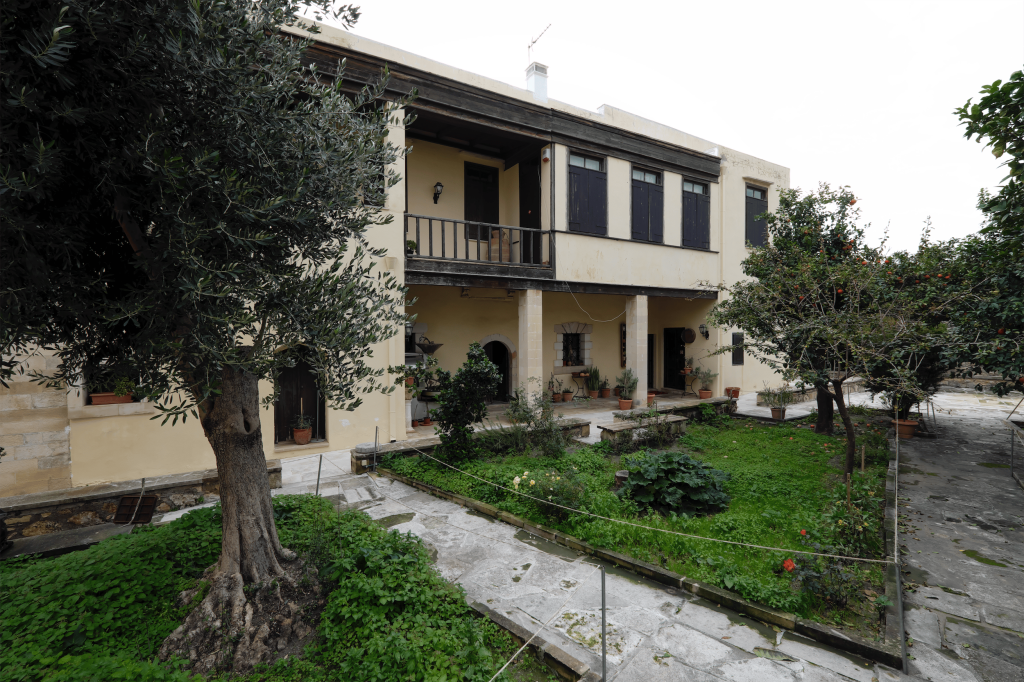
On the east façade, at the far end of the passage, there is an auxiliary gate to the mansion, which dates back to the Ottoman period. This gate leads into a spacious Ottoman courtyard, which joins with a smaller one at the far end, while an impressive stone staircase leads to the upper floor. Of interest here is the kitchen with its large fireplace and its magnificent chimney.
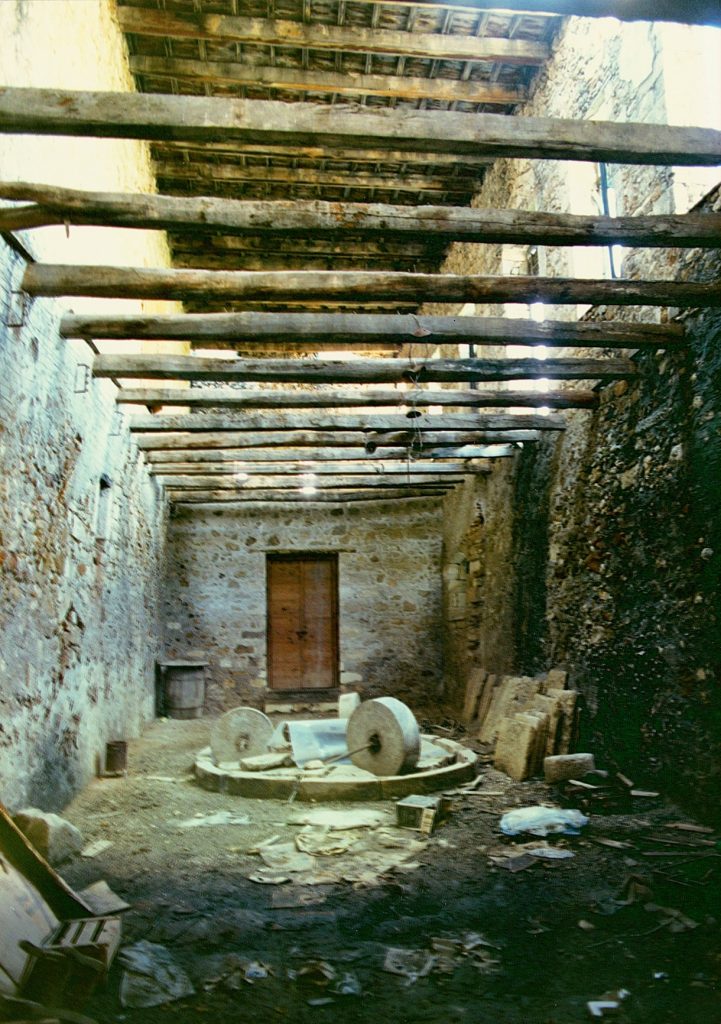
During the Ottoman period the building was the konak -the house- of Selim Bey; it is characteristic that even today neighborhood is called Kamara [arch] of Selim Bey. From the mid-nineteenth century to the closing decades of the twentieth, the building was the residence of the Zachariou family and also housed various small factories (silk mill, furniture workshop, etc.). It was then bought and donated to the Private Foundation ‘Historical and Folk Art Museum of Rethymnon’ by the co-founder and President of the foundation, Fali G. Voyatzaki. The building plot covers 853 square metres, the ground floor of the mansion 340 square meters and the upper storey 390 square meters.
It has been designated as a “listed historical monument” and was restored by the civil engineer Aris Chatzidakis, with financial support from the Ministry of Tourism .
This impressive seventeenth century building provides an ideal place for the Museum, while at the same time utilizing to advantage and enhancing the monument.