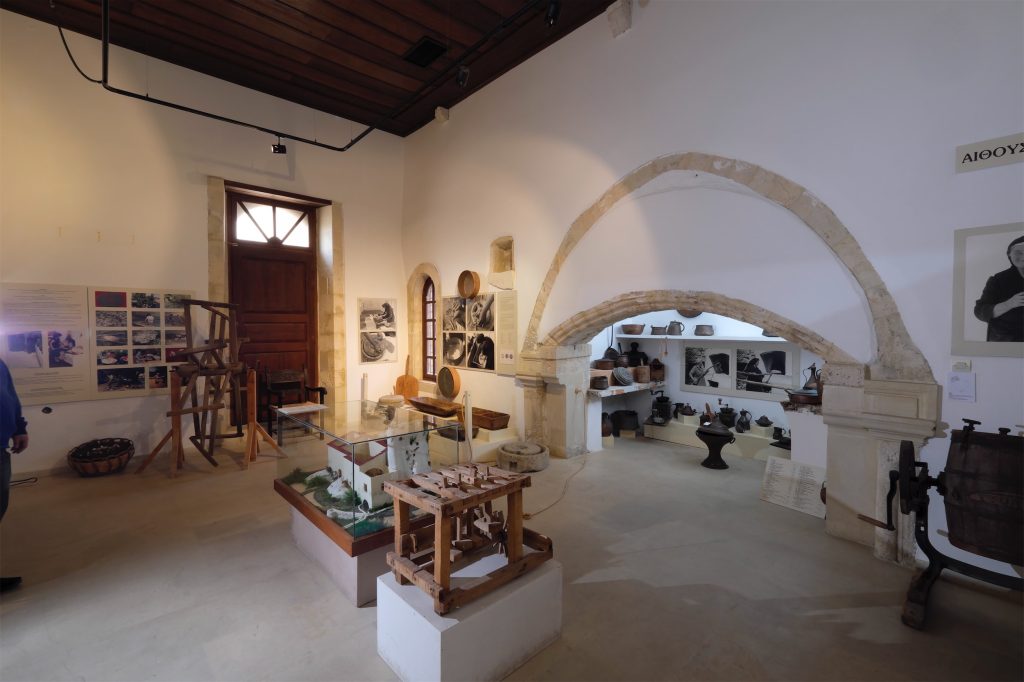
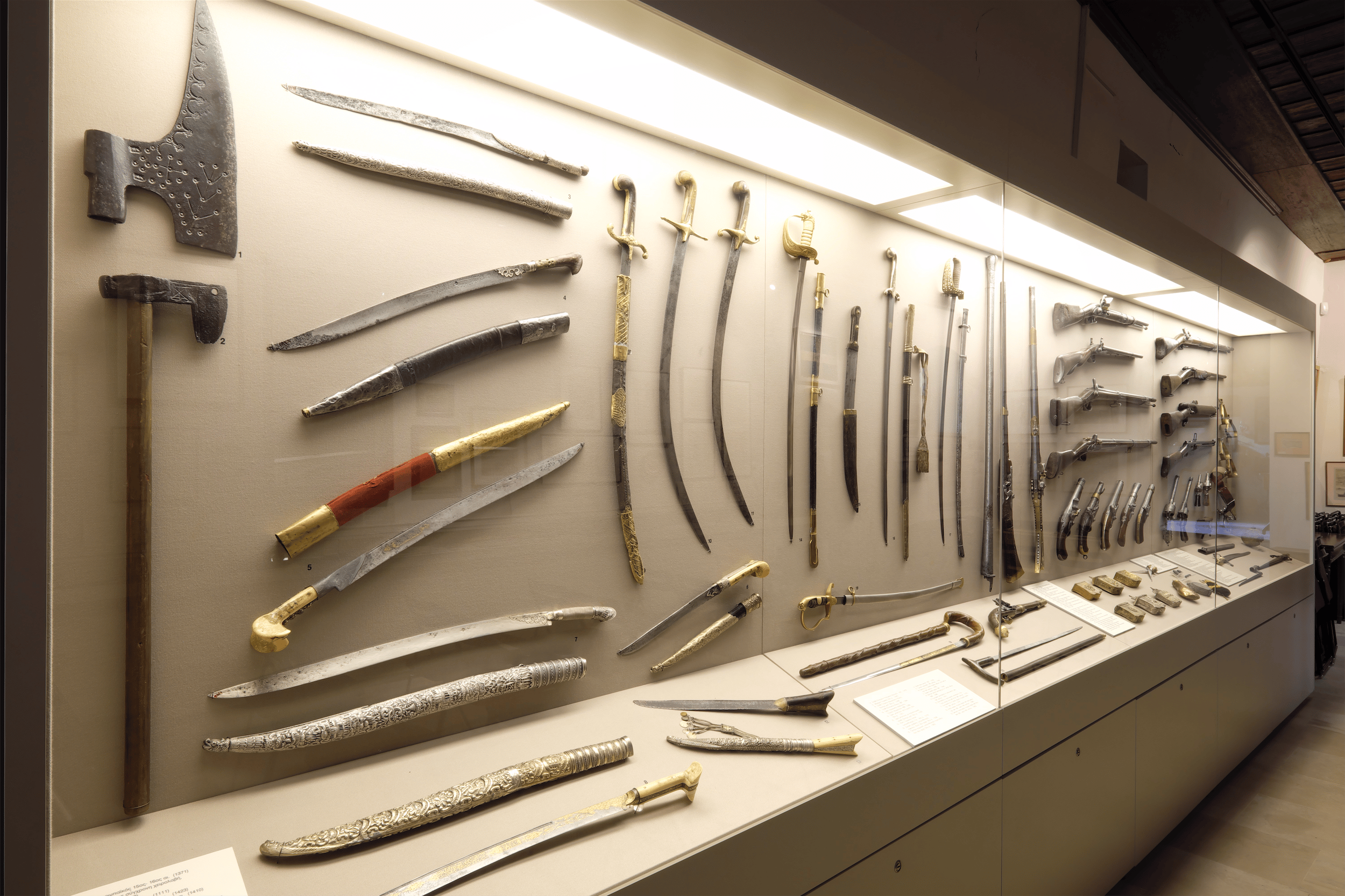
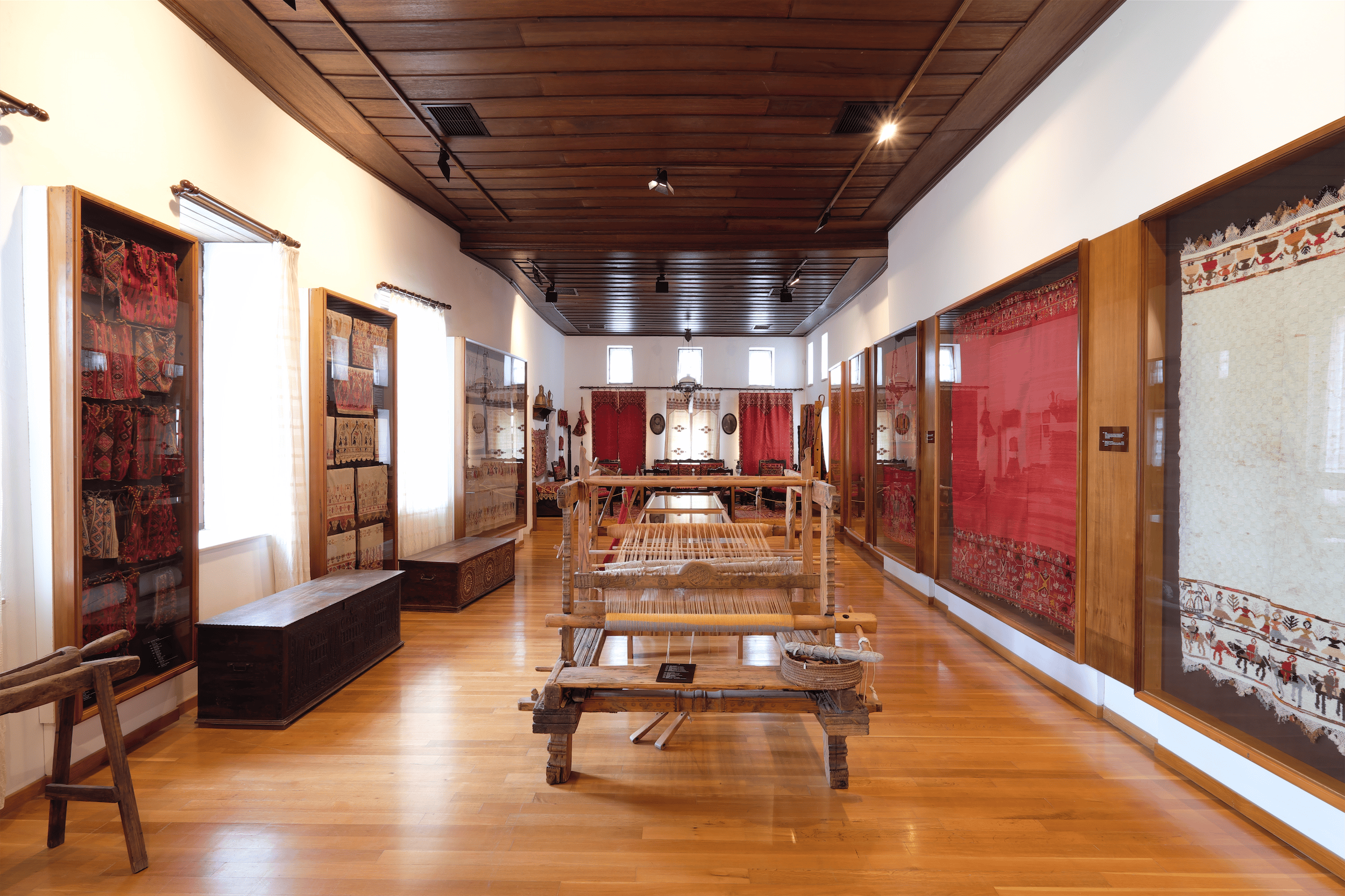
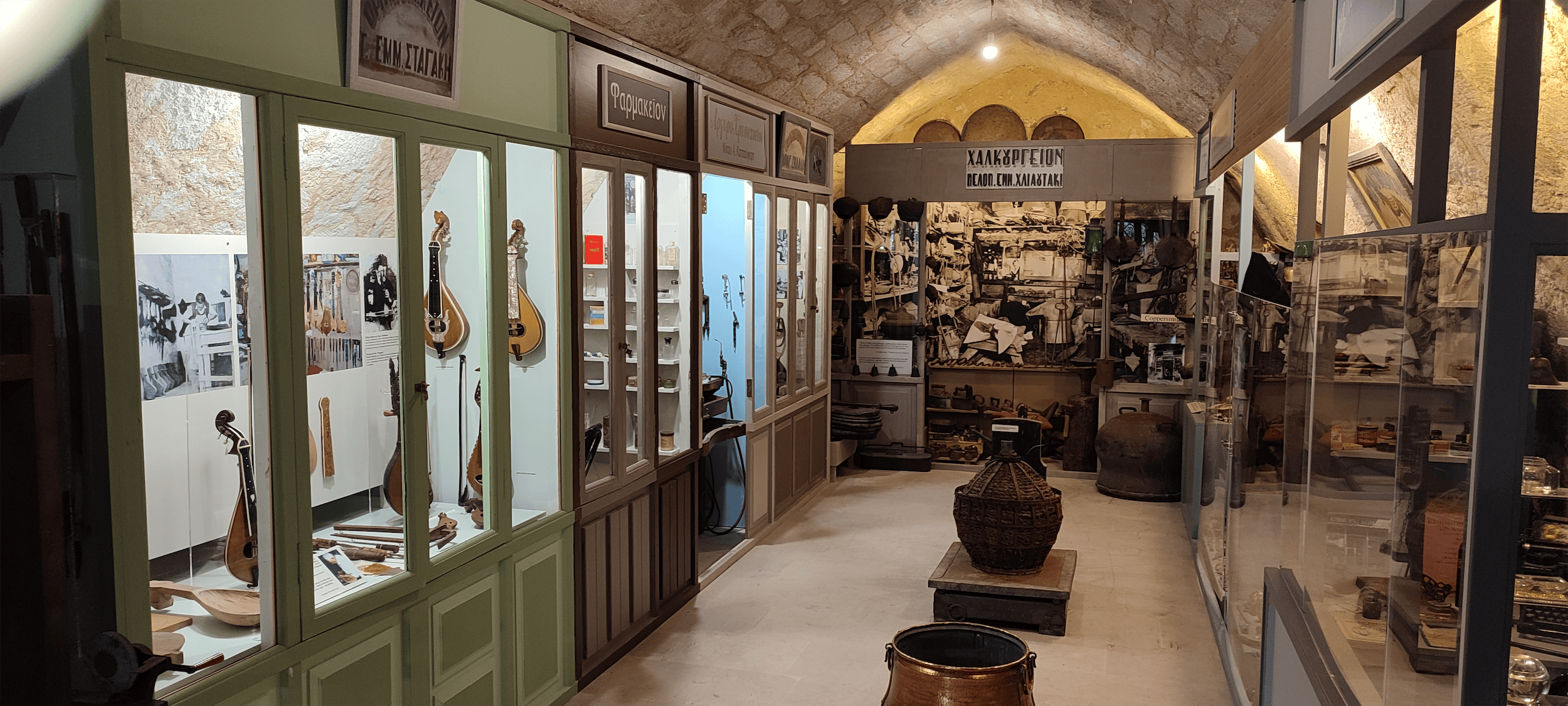
In the folk art collection we present objects of traditional handicrafts, weaving, tools of weaving, embroidery, laces, pottery, baskets, agricultural tools. Also the production of silk, bee-keeping and the traditional breads of Rethymnon.
Traditional agriculture
Traditional agriculture in Crete until the mid-twentieth century kept very ancient elements in its practices, as well as in the shapes and the materials of the farming tools used.
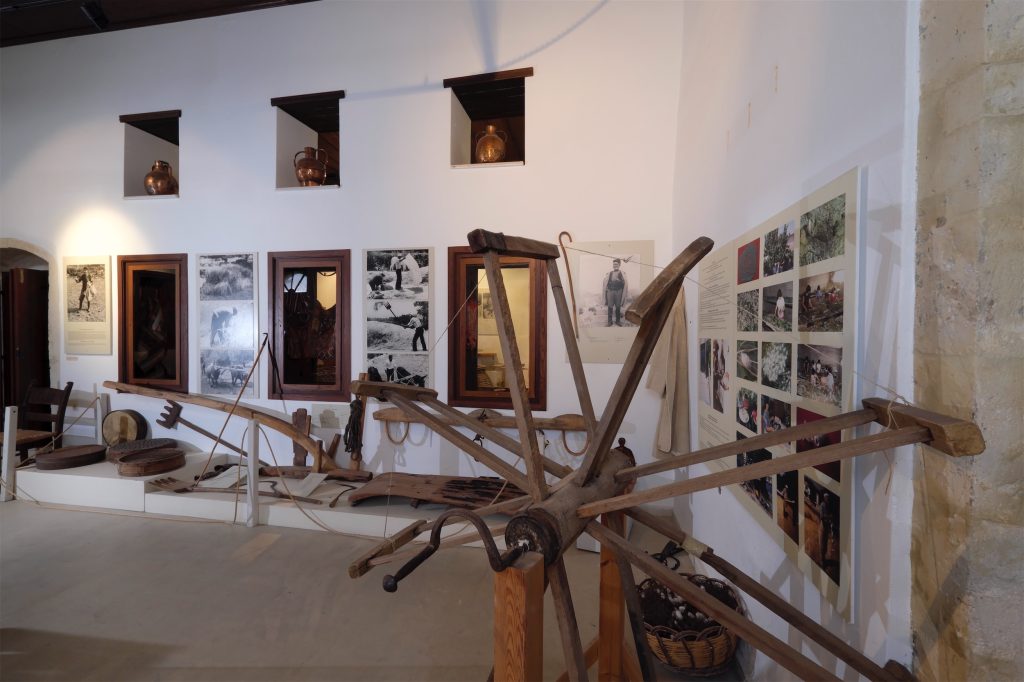
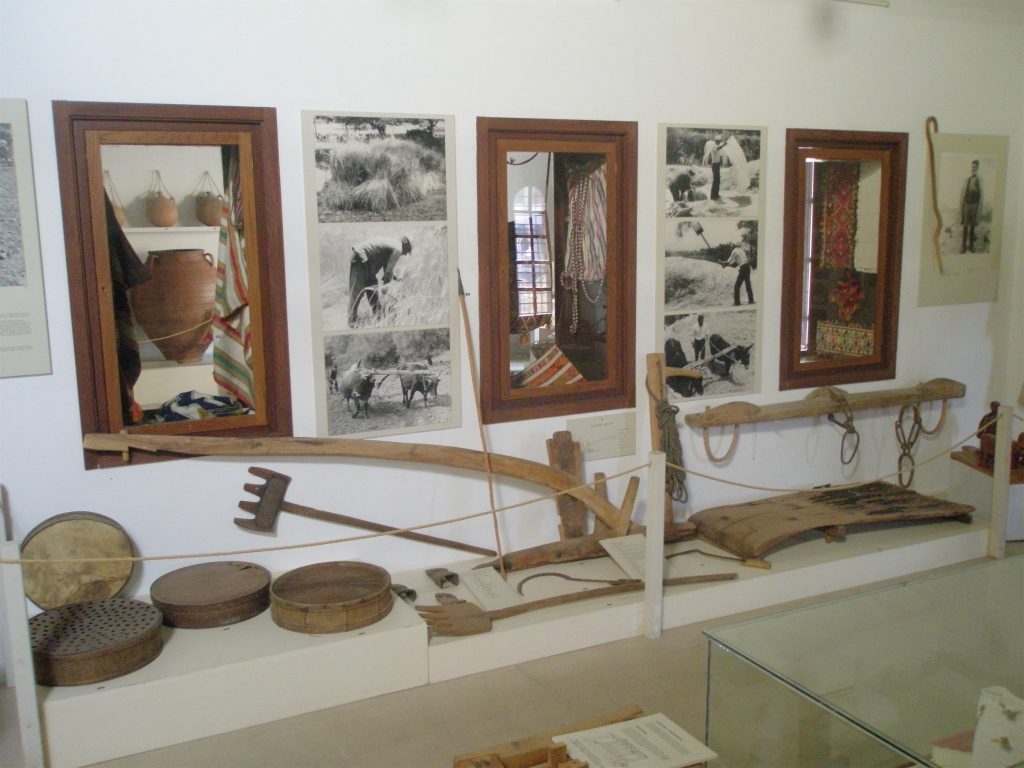
The exhibition of a series of farming tools for cultivating and harvesting cereal crops, together with household vessels for grinding grain into flour, kneading and baking dough, presents a full picture of the processes involved in the preparation of bread. The cultivation of cereal crops can be traced back to prehistoric times. The means and the methods of harvesting, grinding, kneading and baking have not basically changed over the centuries. Very ancient features exist in the shapes and materials of the farming tools used in Crete until recent years.
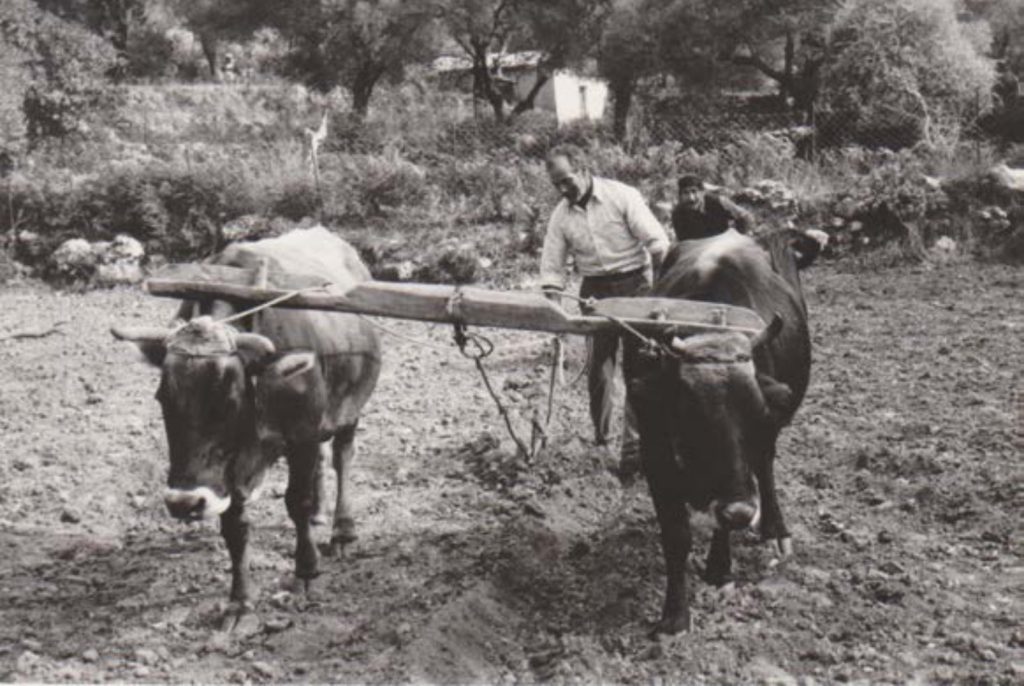
The soil was tilled with a wooden plough or ard (alétri, άrotro), the wooden parts of which had special names. The ploughshare (gynί-ynί), which was placed in front on the draught-beam (podάri), so that it does not delve deep into the soil and is easily dragged. The plough was harnessed to the draught animal by straps (zeftis). These were tied to the horns of the ox(en) and held by the ploughman who drove the animal(s) in the ploughing. After ploughing, the seed was taken out of the bags (sporosάkoula or sporόvourgia) and sown broadcast into the furrows.
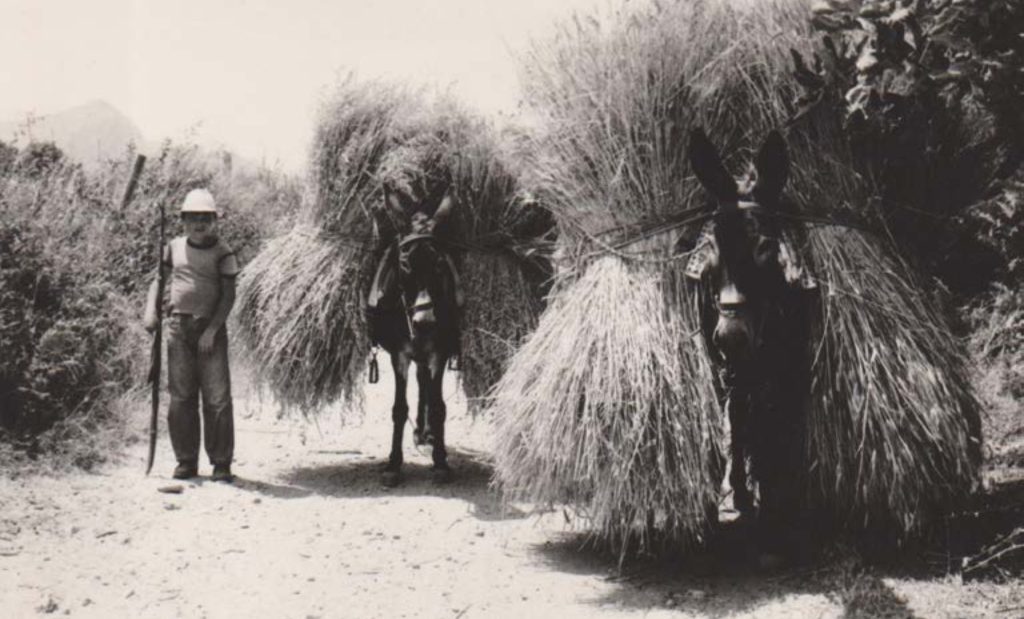
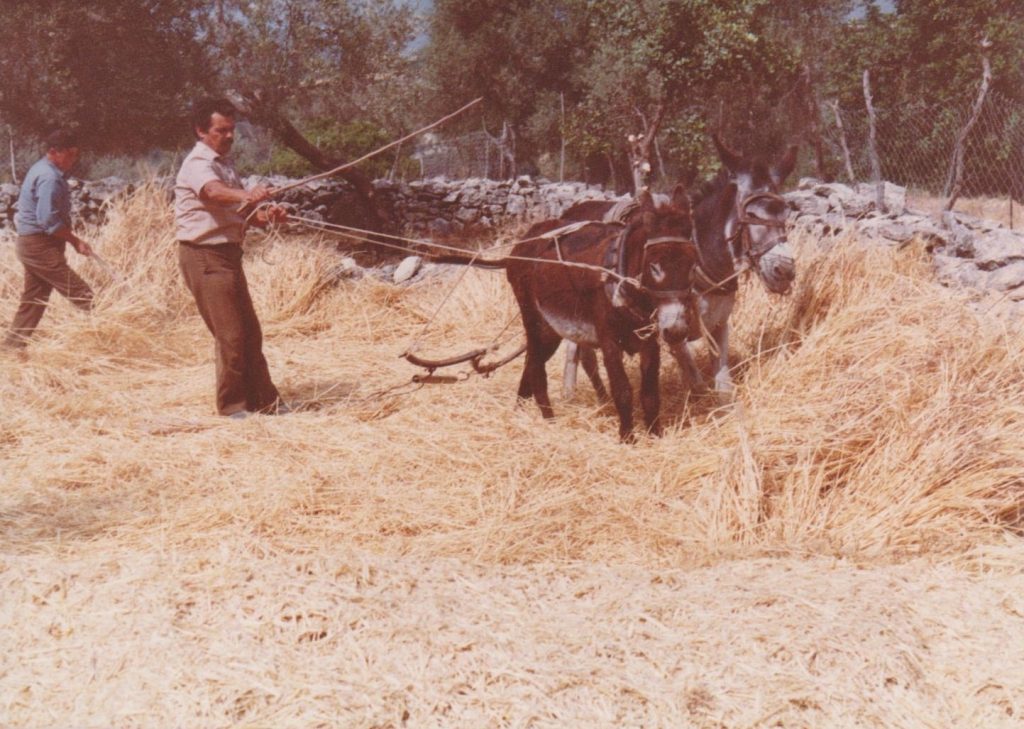
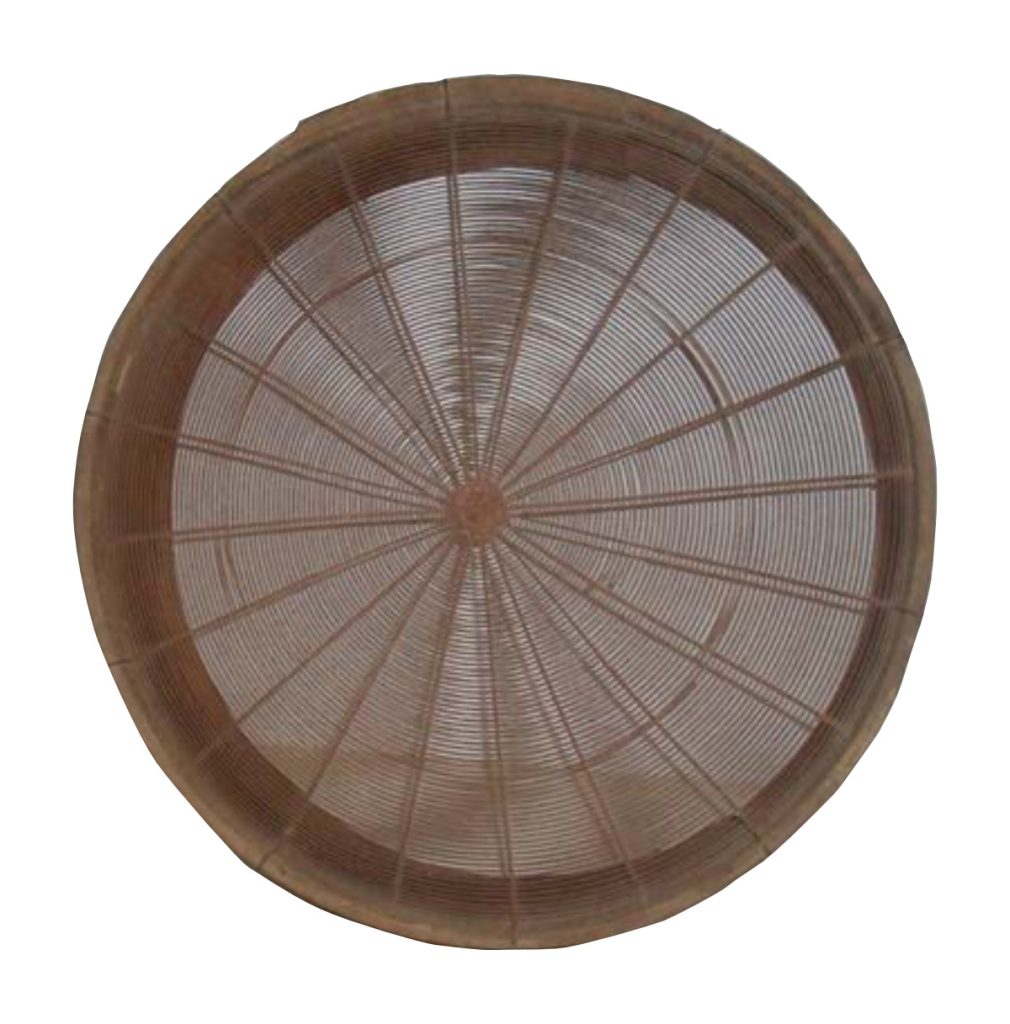
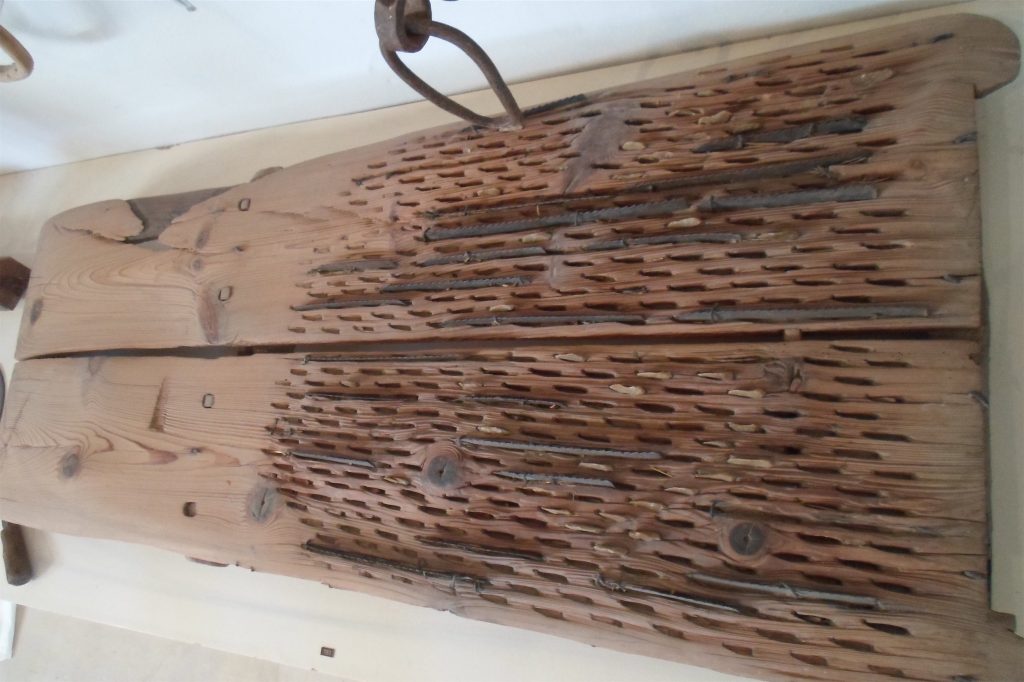
The crop was harvested with sickles. The cut ears of grain where bound into sheaves and placed in stacks. The cereals were threshed with the threshing-sledge (volvsyros), which was tied to the draught animal. They were then winnowed, by tossing in the wind with the threshing fork, after which the grain was rubbed between the palms of the hands. The straw was put in large sacks (chararia) and the grain in a cloth shoulder-bag (tagάri), to remove any remaining chaff. It was then sieved with the volysta and the kόskino. When these tasks were finished, the grain was stored in special large, beautifully-woven sacks.